
Stop Re-Explaining Yourself to AI Every Time
Every time you sit down with AI, you start over. You paste in the same background. You explain who the work is for and what you are trying to do, the same way you did yesterday. You get something usable, close the tab, and tomorrow you do the whole thing again from zero.
It works, sort of. It also feels like onboarding a brand new temp every single morning, one who forgets everything the moment they leave. For recurring work, that is a strange way to operate, and it is not the only one available.
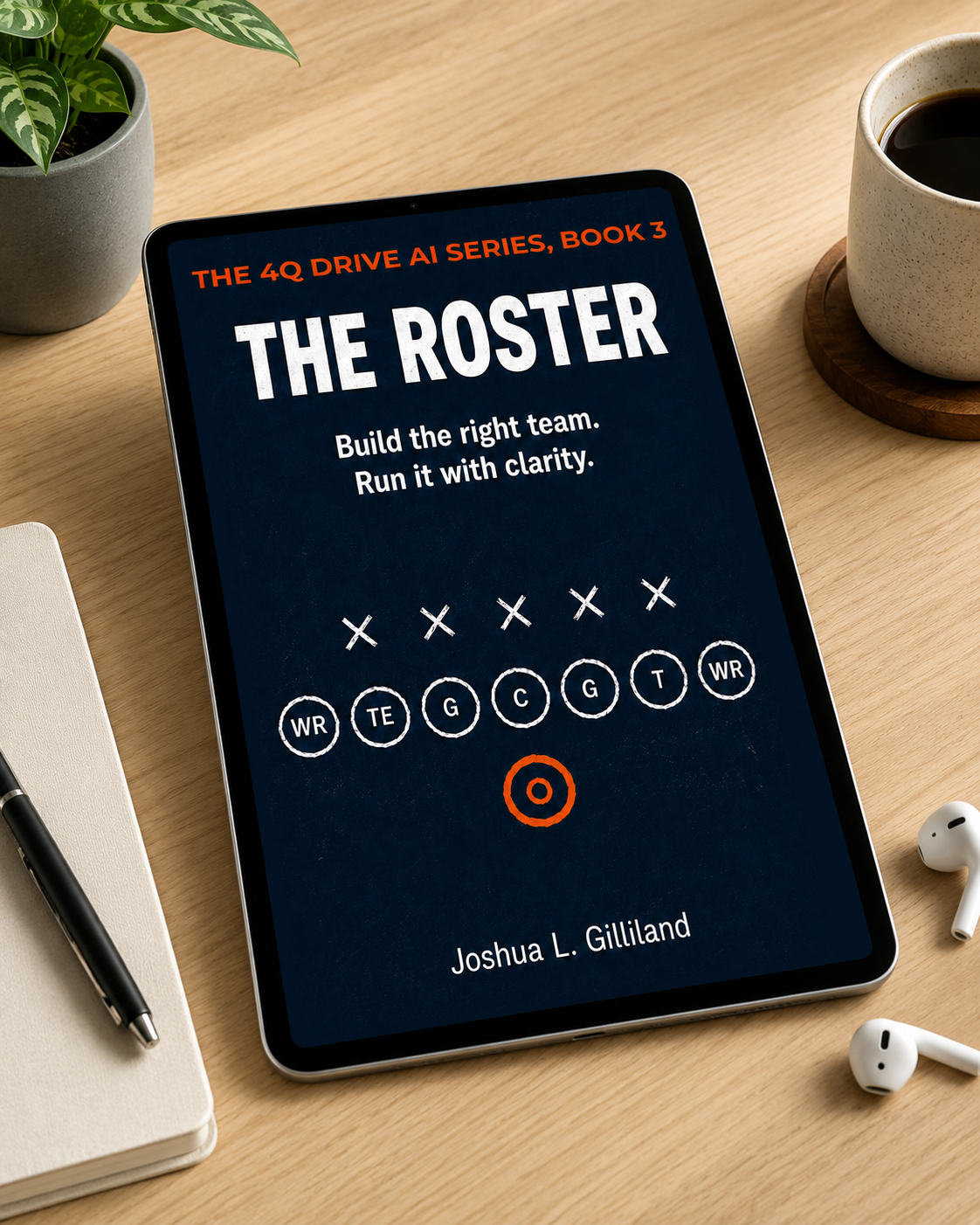
The Roster: Stop Re-Explaining Yourself to AI Every Time
$20 — book and workbook
The team you direct, built deliberately.
Most people use AI as a string of one-off prompts. Every session starts from zero. You paste the same background, explain who the work is for, get something usable, and tomorrow you do it all again. It works, and it feels like onboarding a new temp every single morning, one who forgets everything the moment they leave.
You already know the better way, because you ran operations. You did not re-explain the company to a colleague every day. They held a role. They knew the context and the standard, and you handed them the work and they ran. The Roster is how you build that out of AI instead of headcount: a set of briefed roles, each carrying the context and the quality bar for a recurring kind of work. A researcher who already knows your field. An editor who already knows your voice. You brief each one properly, once, and then you direct a team instead of re-teaching a stranger.
This is staffing, which is a thing you already know how to do. This book shows you how to do it with agents.
Inside The Roster
Why one generalist prompt produces mediocre work, and what a set of scoped roles produces instead.
The Briefing Document: how to brief a role once, with the context, examples, and constraints that make it reliable.
How the team holds up over time, where it breaks, and how it evolves as your practice does.
Contents
Chapter 1: Stop Hiring One Generalist
Chapter 2: The Roles That Matter
Chapter 3: The Roster Build
Chapter 4: Where Your Team Lives
Chapter 5: The Persistent Workspace
Chapter 6: Multi-Agent or Single Agent
Chapter 7: The Briefing Document
Chapter 8: Context, Examples, and Constraints
Chapter 9: Positive Friction in Practice
Chapter 10: Daily Brief
Chapter 11: When the Team Breaks
Chapter 12: The Roster Evolves
What you get
The complete book in EPUB and PDF.
The Roster workbook, which walks you through building your first roster of briefed roles, with the briefing documents to run them.
A guide to the full 4Q Drive system, showing how all five books fit together.
One-Off Prompts Versus a Standing Team
Most people use AI as a series of one-off prompts. Each request stands alone. Nothing carries from one to the next. You are the only thing holding continuity, which means you pay the same setup cost every single time.
Now think about how a real operation runs. You do not re-explain the whole company to a colleague every morning. They hold a role. They know the context, the standards, the kind of work they are responsible for. You brief them once on who they are and what good looks like, and from then on you hand them the task and they run.
That is the shift. Instead of firing prompts one at a time, you build a roster: a set of briefed roles you have set up deliberately, each one carrying the context and the standard for a recurring kind of work. A researcher who already knows your field and how you like sources handled. An editor who already knows your voice and what you will not allow. You brief each one properly, once, and then you direct a team instead of re-teaching a stranger.
Why This Is the Operator's Advantage
This is not a prompting trick. It is staffing, and staffing is something you already know how to do. The person who ran teams for years knows the difference between a pile of one-off requests and an actual operation with roles. You know that the value was never in giving instructions faster. It was in setting up capable people well enough that you could hand them real responsibility and trust the output.
A roster is that, built out of AI instead of headcount. It is how one experienced person does the work that used to take a team, without spending the whole day re-explaining themselves to a machine that forgets. The setup takes thought up front. That is the cost. The return is that your recurring work stops starting from zero.
The roster is the idea at the center of The Roster, the catalog's book on building an AI team you brief instead of prompts you fire one at a time. If it lands, the free guide names the corporate reflexes that get in the way when experienced people start directing AI.
Josh
Founder, 4Q Drive
